
Wednesday, March 13, 2013
Emancipation Proclamation

Tuesday, March 12, 2013
Alexander Stephens and Antietam

 The Battle of Antietm occured on Sep. 17 1862. In the Southern states the battle was known as Battle of Sharpsburg. Antietm was the first major battle to take place on Union grounds. It was the bloodiest single-day battle in American History, with 22,717 dead, wounded and missing on both sides combined.[
Dred Scott and Election of 1860
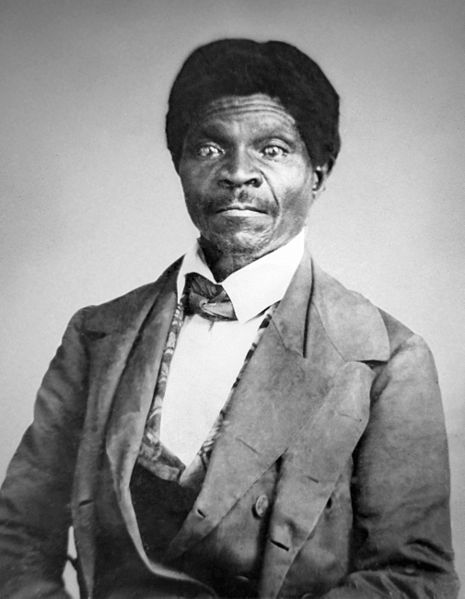 Dred Scott was a African-American slave in the US born in 1795 died on September 17, 1858. Dred Scott was sued unfairly for his freedom. In 1846 Dred filed a law suit for his freedom. By 1850 Dred was rewarded his freedom because he and his family had been illegally held as slaves during their extended
residence in the free jurisdictions of Illinois and Wisconsin.
Dred Scott was a African-American slave in the US born in 1795 died on September 17, 1858. Dred Scott was sued unfairly for his freedom. In 1846 Dred filed a law suit for his freedom. By 1850 Dred was rewarded his freedom because he and his family had been illegally held as slaves during their extended
residence in the free jurisdictions of Illinois and Wisconsin.  The Presidential election of 1860 was held on Tuesday, November 6, and is thought of as the main cause for the outbreak of the American Civil War. The issue of slavery during this time caused the Democratic Party to break in to North and South and created a Constitutional Union Party. Because the South was so divided, the Republican North who mainly supported Abraham Lincoln had enough votes to put Abe in the White House as President without any Southern support. You can only imagine the anger that broke out throughout the southern states, making seven southern states secede to form a confederacy. Secessionists from four additional Border states joined the rebellion at Lincoln's call to restore federal property in the South. Following South Carolina's secessionist movement, the Union admitted Kansas, West Virginia, and Nevada
as free-soil states.
The Presidential election of 1860 was held on Tuesday, November 6, and is thought of as the main cause for the outbreak of the American Civil War. The issue of slavery during this time caused the Democratic Party to break in to North and South and created a Constitutional Union Party. Because the South was so divided, the Republican North who mainly supported Abraham Lincoln had enough votes to put Abe in the White House as President without any Southern support. You can only imagine the anger that broke out throughout the southern states, making seven southern states secede to form a confederacy. Secessionists from four additional Border states joined the rebellion at Lincoln's call to restore federal property in the South. Following South Carolina's secessionist movement, the Union admitted Kansas, West Virginia, and Nevada
as free-soil states.Compromise of 1850, GA Platform, and Kansas-Nebraska Act
Before Compromise:

After Compromise:

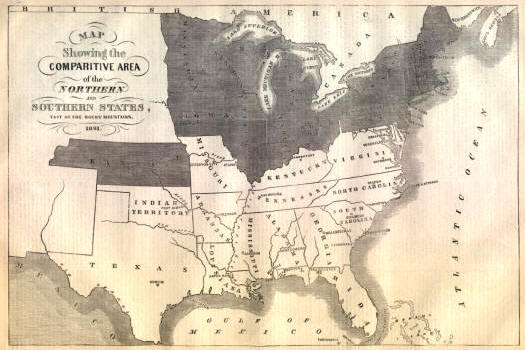
The Compromise of 1850 was passed in September of 1850 and was enacted to even the number of the free and slave states due to the Mexican-American War. The Compromise was drafted by Senator Henry Clay of Kentucky. The results of the compromise of 1850 were the Civil war, no slave trade in Washington D.C, California resulting as a free state, and rising tensions over slavery. The GA platform was basically a statement stating that the Compromise of 1850 was the final resolution to the sectional slavery issues, and that the North could no longer judge or assault the Southerns choices of their rights regarding slavery. The Kansas-Nebraska act created the new states of Kansas and Nebraska, opening new lands for settlement, and had the effect of repealing the Missouri Compromise of 1820 by allowing settlers in those territories in order to determine weather they should allow slavery in those states. The main purpose of the Kansas-Nebraska act was to open up new farm land and to make a new Transcontinental Railroad.
Tuesday, February 26, 2013
Missouri Compromise
Sunday, February 24, 2013
Nullification
Nullification : To invalitdate a law.
 In 1828 a topic of debate was the tariff placed on imported goods, the southerners were'nt happy with this because with a tariff on imported goods, the cost of goods that were not in the US rose. To counter act the tariffs a man named John Calhoun applied a Nillification. This meant that the states were able to nullify (nutrilize) federal law. The nullification caused high tension between federal law and the southern states.
Links:
1. http://en.wikipedia.org/wiki/Nullification

Links:
1. http://en.wikipedia.org/wiki/Nullification
Tuesday, February 12, 2013
Slavery as a Cause

Slavery was the main factor leading up to the Civil War. The country was divided by North and South, North was against slavery while the South was all for it. The north and south tended to bump heads frequently, and in order to maintain a peaceful country they had to resolve their disagreements. Thus creating the Compromise of 1850 (an agreement between the north and south to even out the free and slave states). California wanted to enter as a free state but there was no slave state to balance it out, therefore Texas divided in to 5 separate states (Nevada, New Mexico, Arizona, Utah, and Texas).
Subscribe to:
Posts (Atom)